Your Ad Here

Your Ad Here
@ $100 for 180 Day
Showing posts with label Articles. Show all posts

Saturday, February 16, 2013

❤Power of Love❤


Valentine Day has passed, roses are settled in the vase of water with a touch of vodka, (Great tips it actually works) and the chocolate covered strawberries tucked away in the cooler for that late night snack. Valentine's day whether you like the day or despise it, brings up the one thing we all are looking for in this world, love! Love is that one thing that brings us together or in ways tear us apart. How many friends or family members have we lost because of love, and also gained because of it. Love can be a weapon or bring peace. We all know the world could use just a little bit of love.

Asking around with friends and other bloggers on their opinions and views on what love means to them. We all have our own personal views of what love is. To me love is not just between lovers but between friends and family. It is the solemnly emotion that you care for someone, and show devotion to that person. Love is waking up in the morning and thinking of the people, having a desire to see them and talk to them. To me love is friendship you can't truly know how to love or to show love without experiencing love from friends and family. It the first training in our love journey. Growing up i have been surrounded by love, from friends and family. Even through the the whole coming out period, still felt loved from friends and even family.

While on the love topic a couple of major things happened in the world revolving around love this week. France become another country in the world to accept marriage equality after a long fight from activist. also another Illinois another state in america also accepted marriage equality. showing that the world views of love has changed over the years. love is no longer defined or only for straight couples, but love is for us all gay, straight, bisexual and transgendered. governments and regular people alike have changed and accept the idea,  that you are free to love whomever you want.

Valentines day always brings up the topic of love, you see it everywhere, with movies, music, and blogs. but we need not just one day to share our love, valentines to me is everyday. everyday that i get to spend it with my jannu, habibi, lover and babe, the days where i get to see my little nephew and my besties, that's my valentines. love to me can not be defined by one definition but by so many. love is and will always be the one thing we always search, even when we think we find it. we always search for it in others, searching for the love and acceptance of others. tell me what does love mean to you? are you on the constant search to find love? As always thank you for reading! comment, rate, and share! Love you all.

Tuesday, February 12, 2013

Crossing Ponds


United Kingdom made history again, just this past week Britain's House of Commons, passed a group breaking law. Allowing same sex couples to marry legally. Before this ruling Britain only had domestic partnership and some equal rights. now another nation has shown that marriage equality can exist in a traditional conscious society, something America can take note from. Britain has also shown that marriage equality is compatible with a nation that has conservative views. His newly bill permits same sex marriage in England and Wales; parliaments in Scotland and northern Ireland most likely will consider the question separately. With another country accepting marriage Equality where does that leave America and it's public struggle for equality?

United Kingdom and United States share a mother daughter type of relationship we tend to eventually follow suit especially with television shows and movies. Sometimes even in the political realm, (when was the last time we disagreed politically probably the American Revolution.) However with marriage equality it seems to be a little different. America which is made up of 50 "sovereign" and extremely diverse states have laws defining marriage created at a state level. Although the Defensive of Marriage Act (DOMA) as many of us know as; is before the Supreme Court. DOMA is the act that prohibits the federal government from recognizing same sex marriage even when it is authorized by state law.


While Britain tends to be a more secular society. The church of England and the roman Catholic Church both strongly object same sex marriage. Lawmakers won their vote and support by making it clear that churches wouldn't be required to perform religious ceremonies for same sex couples. And in the case of the church of England by law the bill forbids the church to perform same sex ceremonies. While in America religious opposition is more prominent and not just on the state level. An example is U.S. Conference of Catholic Bishops strongly oppose the repeal of DOMA, arguing the law "takes into account the distinguishing properties of unity and procreation that marks the relationship of husband and wife." 


Oppositions is not as formidable as it once was. Given states like my very own Maryland, Maine, and Washington state authorizing same sex marriage on the recent elections. Which was the first time in history. And with United Kingdom joining other countries like Spain, Norway, and South Africa on marriage equality; regardless of their personal and collective religious beliefs. Younger Americans, Britons, Indians, Afrikaans, and many more are more supportive of marriage equality then previous generations. It's a sign that views on equality are changing, and Gays around the world will one day all have right and support to marry whomever they choose. Give me your input wherever you are in the world, do you support marriage equality? And do you think with United Kingdom accepting marriage equality that more countries will follow. As always thank you reading, rate, comment, and share. 

Tuesday, February 5, 2013

Social networks a curse or a blessing?

Has Social networks improved or hurt gay life or is it somewhere in between?

 Social networks has been a driving force that either brings us together to feel we are in a way apart of a community; and at times can tear us apart, if not used right. To me social media is one of the greatest tools that we can use. Not only do you find others who share in the same interests as you, but it's also great way to share and inform and break down walls that divide us. Last year social media like Facebook, Twitter, Tumblr and others were a driving force for three states to sign into law marriage equality. Michael Cole-Schwartz, director of media efforts for the Human Rights Campaign stated, "That we win these fights because Americans know that LGBT people are their neighbors, their cousins, their aunts and uncles, the people they sit next to in church, and the people they shop with at the grocery store." Social networks have made the invisible become visible, but it also has granted those with a negative voice to hide and become anonymous bullies. Networks have also created relationships and friendships from across the globe. Changed and enriched views on cultures and brought a light on hidden gays. Where would we be without the success of blogs and books about men living on the down low; or which celebrity has finally come out of the closet.

 Gay youth seem to be coming out younger and younger these days. I remember before the rise of Facebook and everyone was still on MySpace while cell phones still looked like a bricks and texting along with touch screens were still an imagination. Coming out was a daunting task and still is for so many, it is never like the movies. There were not many support groups other than PFLAG (Parents, Friends, of Lesbian and Gays), that you would lean on . While friends and family at times were misinformed and lead by rumors. Social networks can lead a double edged sword when it comes to coming out. At one hand we have a growing online community, immediate access to help and resources to make a newbie or even seasoned gays feel safe . The community is extremely important, not only does it become a safety net cause you are surrounded by others who are like minded. It also gives protection against others who wish to harm. Recently, the tension between gay youth and non gay youth seems to be slowly improving however, it is still a sore topic. With efforts like the Trevor project and other online community gay youths can receive the help that they need. While being reassured that life does get better as you get older. Social networks not only create a safety net, but it also created a different type of community, and changed the gay community.

 Twitter, Facebook, Tumblr, and Google+, to name a few; have connected the gay community differently than before. Now you can not only meet local gays and share experiences, go on dates, meet new friends. You can also share the human experience with someone across the world. Learn about different cultures, and share the similarities of being gay around the world. What I have gathered is that no matter where you live in the world being gay is still a hard topic for most. Weather you live in the most liberal places or the harshest against gays. There is always people who do on understand being gay and act on their intolerance. The difference is how society reacts as well as the government. In California social networks helped pass into law; the first in the nation, to ban therapies to 'cure' gay minors. Stating therapists can't provide minors with therapy intended to change their sexual orientation. The backlash of gay social networks is seen in the gay clubs and bars although has improved.

Gay social networks sites like Grindr, Jack'd, and Scruff, changed the way we find other gays as opposed to before with the whole "guessing game". Never knowing if the guy or girl you think is hot is into the same as you. Grindr and others changed the game, now you don't have to go up to someone and ask them if their gay but, now more just say hi and wait and see if someone answers back. Although Grindr and others have brought up some issues with gay on gay relations. You can read that here. Even with these issues the gay community has improved become stronger and spread tolerance like never before. Recently with the use of social networks and outreach programs my state Maryland and 2 other states legalized marriage equality or same sex marriage by popular vote, never happened before in America. Social networks have not only brought together the gay community and made some changes to modern gays. But had changed the views others have on gays.

 Social networks can when used right breaks down some of the stereotypes many feel gays are like. Mainstream media sometimes likes to reinforced some of these stereotypes. With popular shows and reality TV, that seem to only want the typical gay that was introduced long ago, that is funny and sassy, and has attitude, and maybe a little sway and the gay voice. While not all of us are like this it does bring gay life and issues to the dinner table. Now you don't have to go face to face and say "hi, I'm gay, will you still be my friend?" Now you can just make a status update and say "I'm gay!!" While waiting for the likes and comments of friends and peers. Social media and networks can give a voice to those who normally don't have one . It can make a person who doesn't feel loved, feel loved from others and feel as though they matter in the world. Harris interactive researched 2,412 US adults (18+) the LGBT community is more active on social networks than heterosexuals. Aside from being more active on Facebook and Twitter, Facebook they also are more likely to read blogs, and as a result most likely to be receptive to social media. In the coming future as our influence on social media grows tolerance and understanding grows outside. More and more people can be honest about who they are even if it's only online..Social networks has in fact helped the gay community come together and to address issues that are inside the community.


Tell me do you think social media has helped or hurt the gay community? Send your comments below.

Wednesday, December 5, 2012

Diamonds in Africa

"Being gay is not a Western Invention, it is a Human reality." -Hillary Clinton

Just recently two of of my dear good friends tied the knot in a beautiful ceremony in Cape Town, South Africa. It was a beautiful summer ceremony under the warm sun, and overlooking the breathtaking blue ocean. Even though i could not be there in person for various reasons the cost and not having a passport yet, but those are only minor details. The wedding was superb such a beautiful moment. While the wedding was  grand it made me think what is gay life like in South Africa. If it was similar to its commonwealth partner India, or similar to modern day United States or hellish like present day Uganda where gays are killed and terrorized. I was pleasantly surprised that it was like neither, although there are similarities to India and United States its so much its own. A total diamond in the ruff for gay rights laws and protection. Like most growing countries with a strong gay community there is always animosity and discrimination.


South Africa was the first country to constitutionally outlaw discrimination based on sexual orientation. Also in December of 2006 South Africa became the fifth country in the world, and the first in Africa which is notorious for being anti gay, legalizing same sex marriage. Like many commonwealth countries South Africa had its own version of the immorality act which prevented men from having sex with other men, sodomy and other "unnatural" sexual offences. Also, prohibiting men from engaging in any erotic conduct when more than two people present, all of which was punishable by jail time. During this time gay men adopted Gayle or Gail language, which is slang based on English and Afrikaans language. An example is "Varda that Beulah! Vast mitzi. She's a chicken and probably Priscilla and I don't need Jennifer Justice in my life right now." translates as "Look at that beauty! Very me. He's young and probably a policeman and I don't need trouble with the law in my life at the moment."

In the 70's and 80's LGBT activism became a part of the human rights movement within the nation. With small groups dedicating their efforts to LGBT rights male same sex relations and conduct became legalized in 1994. Followed by South Africa becoming the first jurisdiction in the world to provide constitutional protection to LGBT people, also disallowing discrimination on race, gender, sexual orientation and other grounds in 1996. More efforts soon followed with a Transsexual persons allowed to change their legal gender. Gays and lesbians can serve openly in the military, joint and step parent adoption since 2002, same sex marriage legalized in 2006. And the age of consent is equalized for gays and straights in 2007. Also allowing gay men to donate blood within a 6 month period. A groundbreaking moment occurred this year when South Africa became the first country in the world to officially recognize the gay flag.


While legally and constitutionally equality is ensured for gays and others part of community. Social acceptance is generally lacking in rural areas and in the eastern half of the country. There have been numerous cases in which in which gay women have been the victim of murder, beating, and or "corrective" rape. Human rights activists have pointed out that many men believe that lesbians pose a threat on the traditional male authority, also the male rapist purport to raping lesbian victims with intent to "cure" her of her sexual orientation. While South Africa has no official hate crime legislation, Human rights watchdogs have condemned the continued impunity and accused government of turning a blind eye  on murders or rapes in a homophobic manner. Watchdogs believe much of the sexism and homophobia that erupts is tied to male frustration with unemployment and poverty. It has been documented that more than 30 women have been killed in South Africa based on their sexuality.


South Africa, like many countries have incidents of homophobia, it has become one of the top gay destinations. Gay people in major urban areas like Johannesburg, Pretoria, Durban and Cape Town are readily accepted and have a thriving gay nightlife. Cultural, arts, sports, and outdoor activities play a major part in everyday South African gay life. Annual gay pride events in Johannesburg and Cape Town are held, and Krysna hosts the yearly Pink Loerle Mardi Gras which attracts gay people around the country. Even smaller cities like Bloem Fontein, Port Elizabeth and East London are gay friendly. Locally produced television programs have also focused on gay right with the success of soap opera Edgi and Generations featuring  long term gay relationship and addressing gay issues like homophobia and race relations.


Planning a trip? South Africa has a reputation as Africa's most gay friendly destination attracting thousands of tourists annually. In recent years South Africa became the first country in Africa to open openly gay hotels, the Amsterdam Guest House located in Cape Town. The Hotel manager Lourens Botha, pointed out "In South Africa we have had our own challenges under Apartheid you could not admit being gay. you would have been persecuted and imprisoned... Which is what now is happening in other parts of Africa, however liberty allows South Africa to help other African gays." “Today I run a hotel where gay men from all over Africa come and feel comfortable. they are astonished at how relaxed things are here... in their home country they face persecution, violence, and even death but here if only on holiday they can be free." In 2011 South Africa was rated third most wanted gay travel destinations. Cape Town where 10% of all tourist who visit are gay, won as worldwide favorite gay destination with over 200,000 gay tourist and holidayed in Cape Town.


South Africa, has come a long way with the oppression of Apartheid to its current stand on human rights and LGBT rights. At a time being gay was outlawed in the country where as now companies seeks out gay professionals to work in their companies openly under the “Pink&Rand”. While animosity from religious groups are still prevalent many religious leaders have voiced their support for the South African LGBT community. people like Archbishop Desmond Tutu and Dr. Allan Boesak are strong vocal supporters of gay rights in South Africa. South Africa has become a forerunner for gay rights and diamond in Africa. They are leading the way for equality and changing their country for the better. There are some that want to revert back to times when gays were not free and many were oppressed. To me the west can learn from the South Africa, how they collectively changed their nation legally. just like the west minds have yet to be changed, but their slowly changing with the exposure of gays and lesbians. Although here in the states many lesbians are not raped by men, we do have hate crimes that happen daily and gay bashing is still a prevalent problem. Even in the large cities where most would feel things like that does not happen. Recently the United nations stated progressive attitudes in South Africa as well as Argentina, India, Spain and Mexico have attracted the gay market in droves. Tell me how you feel would you like to travel to South Africa? or how you feel about South Africa and its progressive gay culture!

Tuesday, November 27, 2012

Leading the Way

In life we tend to find people whether they are an athlete, an actor, singer, friend, of even a family member who inspires us to do better, and to achieve greatness. When one comes out and is trusted in the world as a new gay man or woman looking at the world with semi rose colored glasses, ready to take the world on head strong. There seems to be a fire in ones heart or a zealous nature to their actions. These newly one will one day possibly be leaders and role models will break down walls that divide us in the gay world. I believe one day we will have more leaders and role models that will lead us far it may be you. For me personally some of my friends are my role models like the incomparable Vikrant Lal¹ and my dear friend and activist Ravi Batra² who to me are breaking walls in the desi gay community here stateside, spreading awareness that "hey, we are here too! We are no longer a quiet group in the gay spectrum, that the media likes to portray.  Even though being  gay and desi is still in some minds an oxymoron and not readily accepted among all. However, its growing with more strong men and women standing up for themselves and their beliefs.  People like Godfather of LGBT right and activism Ashok Roa Kavi, Harish Iyer, Film maker Sridhar Raghayan, first only gay prince Manavendra Singh Gohi, Director Onirban Dhar, actor Parvesh Cheena, and comedian Vidur Kapur. All of them had made some small and large impact on gay rights, awareness and culture as a whole.
Ashok Roa Kavi is considered as the godfather of gay rights and activism in India. Spending over 2 decades spreading awareness to a country that was and sometimes is closed minded. Roa Kavi came out in 1986 in Savvy Magazine the same year his mother Shoba Row Kavi giving an interview to Savvy Magazine expressing her love for her son, first time a mother in India spoke publicly about their gay son. In 1990, Roa Kavi founded the un president gay magazine Bombay Dost India. Back when it was still illegal to be gay many closeted gay men wrote letters and knew the secret spots to find Bombay Dost. Presently,  Roa Kavi is the founder and chair person of Humsafar trust, a male sexual health group who aids gay men a d transgender persons and agitates for legal emancipation of homosexuality in India.
Film is a big part of Indian Culture, with the rise of Bollywood, Tollywood, and Hollywood that sort of brings family's together. Dostana was a big  commercial success and many anticipate for dostana 2 more chances to see John Abraham shirtless. A few people in the Indian subcontinent and beyond are using film to make a difference to spread awareness about social issues and queer issues. Indian Filmmaker Sridhar Rangayan who  creates films will special focus on queer subjects. Films like he Pink Mirror and Yours emotionally have been considered ground breaking because of their realistic and sympathetic portal of the largely closeted Indian gay community. Rangayan's film pink mirror is still banned in India due to its homosexual nature by the the Indian censor board. Another filmmaker is the critically acclaimed Onir with successful hits like My Brother... Nikhil  which deals the Goan government harsh treatments of AIDS patients in the 1980's and the stigma attached to them. Groundbreaking for its time, i think a must see. Another film is I Am which depicts four short films exploring themes of child abuse and same sex relationships. I Am became critically acclaimed winning various awards and opening minds about gay life in India.
Many may not remember the short lived comedy Outsourced, about an American call center in the heart of Mumbai. The show consisted of a corky cast from the hot throb to the funny jokester. It always was my first encounter with the lovable actor Parvesh Cheena, some say he is the first openly gay desi actor in America, but we never know. Another American Desi is Vidur Kapur who was recently named one of the top 50 most influential in the LGBT south Asian community. Kapur is an hilarious gay comedian who jokes about growing up in a south Asian household and being south Asian and gay. Kapur not only makes jokes but also brings a light on the growing south Asian gay community, which is needed.
Harish Iyer is a lot like myself, using social media to not only inform, but to bring a positive message to the world. Iyer is a gay and animal rights activist in India. And is sometimes refereed as the social media guru. Iyer has redefined the affect on social media and social change. Spiritual guru Deepak Chopra said "you cannot fight the darkness, you can only bring in the light. If you want the world to change. Think. 'How can i be an example of that?' And be the change. With social media, use it to create change: help people with it, raise money, start a business." I have always felt your influence even in social media can have the same effect as any one of these role models. Using our own platform weather its a blog, or twitter, or Facebook, or even a stage to share our story and influence another. The act of being s role model is not just about fame or fortune but using ourselves to make a difference and change the world. Tell me who do u feel is a role model, it can even be yourself, or a friend or an another celebrity! Thank you for Reading!! ¹For Vikrant Lal story http://www.southasianparent.com/dare/you-are-not-a-gay/ ²For Ravi Batra story

Saturday, November 3, 2012

The Mean Girl Effect

Gay on gay bullying, prejudice and what nots..


We all have seen it, well if you haven't you have to check it out on Netflix. Mean Girls, is a story about a young girl from South Africa  who travels to America to attend public school. Desperately trying to fit in she discovers how similar high school is to animals in the wild. Throughout her journey she realize all we are searching for is acceptance and love. She also noticed how everywhere has their on clique there is always the plastics, and the Goth or "emo" now a days. Not sure if punk is still a thing. And bring the new one we desperately try to fit in at any means necessary. But what happens when the group you feel the most comfortable with doesn't make you feel welcome. What happens when you run to your safe haven for comfort from prejudice and bullying and you find the same?


Bullying has not just become an external issue, it is also internal and it is ugly. The gay community can be at times not welcoming to its own. Gay on gay bullying is an issue that is rarely addressed, most LGBT organizations would rather address straight on gay bullying but never its own. Most LGBT groups see the bigger issue is heterosexual acceptance of us; comments Dawn the Self Esteem Queen, a 33 year old motivational speaker, author, and teen mentor in the Los Angeles area. "Its a travesty to me" Dawn says " there is so much hatred in the LGBT community that we would never have to be bully by the heterosexual community.. We want to be accepted by the heterosexual world but within your own world, your not accepting each other." Coming out is a hard enough if not daunting task, however some gays loose their self identity, they believe they have to fit within labels of the community and act a certain way in order to fit in. It is not enough to say "i am a lesbian,  I'm gay, I'm transgender, I'm bisexual. If your definition is not the same as theirs ( other LGBT peoples) definition, then there is bullying, there has become so much divide by these titles." Being a gold star cis-gay male¹  is the best way to get in the "queer country club". However those who may identify themselves outside of the strict guidelines of homosexuality can find themselves to be considered a second class citizen. The only thing worse than being marginalizes is being further marginalizes within a group that is suppose to offer support. Gay media seems to act as though these issues are confined to older gay population, and the young modern gay are about inclusively. Sadly it is not all true, many times you hear friends saying they could never date a bisexual guy or a transgender individual. Creating a bridge in the gay community which is suppose to be a safe haven to all who feel different. Opinions against bisexuals, transgender's, and other gay individuals sometimes is the result of deep seated prejudices that needs to be addressed.


Many of times gay on gay bully happens online or in person from a person who is not comfortable about there own sexuality.  Dr. Gary Howell, Tampa Fla. and Illinois psychological associations chair of sexual orientation issues section, explains that gay on gay bullies often occurs when the bully is hiding his homosexuality. " they bully to keep from being found out... they're trying to protect themselves." Which the clinical term is reaction formation, a defensive mechanism when a person goes to the extreme to avoid anxiety and to feel safe. The flip side is when a heterosexual male is secure with his sexuality, they are comfortable around gay men, and do not participate in gay bullying.


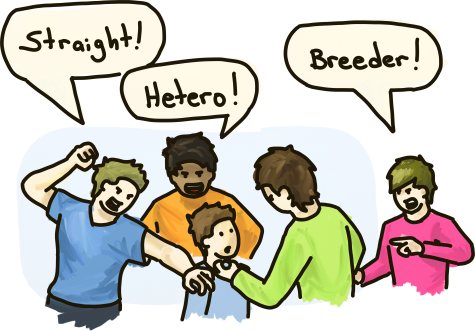
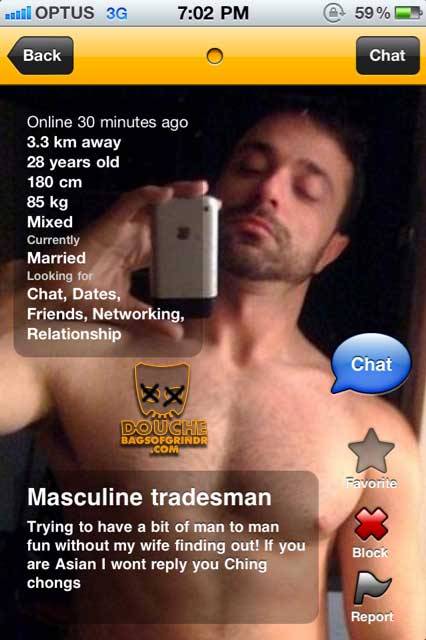
Mobile dating has in a way transformed the lives of gay men worldwide. You can be on a desolate island, home depot (like you would catch me at home depot), church, or even on another date to easily find someone near by or far away to meet or even marry, depending on where you live. However online dating can be a emotional battlefield for anyone who feels like they are too skinny, fat, too ethnic, not enough ethnic, to hairy, to feminine or girly, or even the dreaded one too old. Which in the gay world seems like anything over 30. The newer gay designated social media sites has changed the way we date, we are judged by our profile picture. It seems if your not borderline breaking this rules of the app you are unnoticed.  Or an easy trigger for an angry gay looking for their next prey.  Some guys think of nothing than attacking each other publicly and proudly with profiles filled with knife cutting put downs.  One points out " i block more Asians than the great wall of China" or the usual "no fatties, or daddies. Creeps, fur balls, queens... etc. Times like these gay dating becomes more like a high school cafeteria than the fun loving gay community you see on TV. Ask yourself this when does personal preferences become racism?


We live in a time when being gay isn't easy. We also happen to live in the digital age, which had made bullying so much more prevalent, subtle, and pervasive in all aspects of gay life. While straight people may find it difficult to believe there is such a thing as gay on gay bullying.  The main issue is how separated we are. The cross category division is one of the factors that prevents gay rights movement from making more progress for equality. Addressing gay on gay bullying and prejudices with the help of straight allies is a strong key towards making progress. As our gay society is becoming more tech savvy and more outspoken we forget at times that we need to strive to accept us all. Strive for understanding of one another and accepting our own differences. The gay community is designed for being a safe haven a place of learning and understanding, not hate we already get enough hate from others, we don't need it from ourselves.  Tell me what you think of gay on gay bullying and prejudices.. do you feel like the gay community is one giant scene from mean girls?

Thanks for reading! Add a comment or send me an email!!


Almost 90% of lesbian, gay, bisexual, and transgender (LGBT) students report being verbally harassed at school because of their sexual orientation LGBT teens experience homophobic remarks d harassment throughout the school day, creating an atmosphere where they feel disrespected, unwanted, and unsafe. Homophobic remarks such as "that's so gay" are the most commonly heard. These slurs are often unintentional. If you know someone who is being bullied reach out and help we have all been there.

Monday, October 15, 2012

Vivan los Gays Mexicanos


For the past few years Mexico has been in the headlines of gay rights with the passing of Gay marriage in Mexico City and Civil Unions in other states. Allowing gay couples to adopt in Mexico city and Coahuila. However nationwide only single a gay person can adopt. While same sex relations are legal since 1871 and discrimination protection for sexual orientation since 2003. Even though many groundbreaking laws have been passed violence against gays have been high over the recent years.


Homosexuality was decriminalized in 1871 with the adoption of the Neapolitan code. Since then many laws have been put into place to protect gays and offer them with equal rights. Although the laws are in effect it does not change public opinions on gays. In 2005 48 percent of the Mexican population interviewed indicated they would not permit a gay person to live in there home. While 95 percent of gays in Mexico have stated that they are discriminated against. Murder of gays and lesbians have been on the rise in Mexico and other Latin American countries. Despite the governments growing tolerance campaigns and laws legalizing same sex marriage in the capitol. 76.4 percent of gays have been subjected to physical violence because of their sexual orientation or gender identity, and 53.3 percent have been assaulted in public spaces. Transgender persons have been subjected to mass detentions, extortion, and physical abuse at the hands of police and military officials. Gays have also face widespread employment discrimination both in the public and private sector.  Four out of ten gays declared they were a victim of exclusionary acts, more than half have felt rejected and six out of then felt that were the worst enemy of society.  Mexico city is one of leading gay tolerance areas however it hosts one most homophobia motivated killings with around 30 murders a year between 1995- 2000 and nearly doubled between 2001 and present. Many of the homophobic murders go unnoticed and unsolved, for there are no laws protect or sanctions against hate crimes; and many feel like the police doesn't care.


With all the new laws becoming in effect some minds are beginning to change, and the recent popularity of gay tourism has drawn national attention to the presence of homosexuals in Mexico. Young urban heterosexuals attend gay dance clubs and have openly gay friends. Change continues to happen slowly in the hinterlands, however even in larger cities change may come with backlash. The influence of foreign and domestic cultures has grown throughout Mexico. Attitudes are beginning to change in larger metropolitan areas where education and access to foreigners and foreign media. Tolerance of sexual diversity in indigenous cultures is widely seen. Currently public display of affection and cross dressing is still taboo.  However there is a thriving LGBT community in Mexico larger cities and resorts. Places like Zona Rosa, (Pink Zone) is the gay capital of Mexico hosting fifty plus gay bars and discotheques. Guadalajara is he second gay city and following Tijuana, Monterrey, Puebla, León, and Port City Veracruz. In these area are safer and more tolerant but like any city not all minds think alike.


Mexico has a new thriving gay community with freedoms to marry or civil union. Although hatred and homophobia runs rapid throughout. The access so social media and the internet had brought some tolerance to many. And new educational programs to encourage tolerance for gays and other sexual minorities is on the rise. Change like many Latin American countries is on the rise with the growing tolerance of sexual minorities. If you live in Mexico or any Latin American Country comment below how is life for you in your city? You do not have to be in Latin Americas to comment also. I truly feel we all share a commonality no matter where we live in this world. We all share similar experience or knows someone that has. Thanks for reading!!


Source: LGBT rights in Mexico Wikipedia

Friday, September 28, 2012

Secret world of Pakistan

Nepal was the first country in south Asia decriminalization of homosexuality and the only to allow same sex marriage. Followed by India in 2009, although gay marriage is on the back burner. Both countries have made it easier to be free of repression, though socially life is still hard, and many still live in fear. Though socially change is slowly happening on views on homosexuality and people of the third gender. Pakistan has somewhat made its way to the middle. Legally homosexuality is still banned since 1860, and the law has yet to be repealed. Since the law has been in effect for so long there is social disapproval towards gays and other sexual minorities.  Pakistan is officially an Islamic republic, however practices mixed laws inherited from the British. As a result increasing liberalization trends and globalization and social tolerance. There have been many public gay parties taking place in the country and parties have been thriving for a number of years. With some progression in upper and middle class; Pakistan still does not have any civil rights laws to prohibit discrimination or harassment, and there is no legal recognition of same sex marriage or civil union. While the LGBT community has not formally begun to campaign for LGBT rights. However there is growing tolerance for social gatherings of gay men, in the cities and is seen as a historical move. In 2009, the Supreme Court of Pakistan ruled in favor of the civil rights of transsexual citizens.
Recently, Pakistan has seen an unprecedented explosion of "Queer Culture" and urban gay life style. With this new transformation of queer culture and gender roles have become increasingly visible in urban Pakistani males, with the rise of metro-sexuality. Metro-sexuality is nothing but liberalization of gender identities and roles. The things considered to be taboo for masculinity have gained acceptance in increasingly larger number of males. Fashion that once considered to be identification for gay men have become mainstream urban male fashion.  More men are wearing low rise jeans, bright and exotic colours, necklaces, rings, and waxing, which all can he traced to attire of underground gays in 1960's London. The media has also become increasingly aware of the value of the male figure. Many music videos have emerged. Pakistanis consciously or unconsciously to celebrate queer themes from western media. For the past few years gay culture has grown, while the impact has been strong on culture but political expression has been virtually non existent. BBC has noted that homosexuality is better of in Pakistan due to "don't ask don't tell" policy; that is a result of an age old tradition of tolerated social taboos and lack of political activism.
Television has also seen a slight change with the success of Ali Saleem and the emergence of "Begum Nawazish Ali" his alter ego. Ali's show subverts and challenges a lot of normal's and taboos of Pakistani society, and has become tolerated and even celebrated to an extent. Ali is known somewhat of a post modern phenomenon, that exhibits ambivalence not only to gender but also sexual orientation. In the show Ali, dresses up as a woman to become Begum Nawazish Ali, and flirts with cute lads that are searching for a bride. Ali has described himself as being bisexual, but sometimes refers himself as gay or "try-sexual", currently he is rarely seen as male but as a woman. With the phenomenon of Ali Saleem, and the media's growing acceptance and tolerance as well as the efflux of many young men who have studied in the west, have helped increase awareness of gay as an identity. Various "underground" gay events and parts arise in urban area like Karachi, Lahore, and Islamabad, reported in the Guardian UK: "Under a starry sky filled with fireworks, about 150 gay men clambered to the roof of an apartment building for an exuberant party. Bollywood music spilled into the streets as dress-wearing men twisted and whirled flamboyantly. Some older men with mustaches and wearing traditional shalwar kameez stared silently from the sidelines. But most of the party goers were in their 20's, dressed in jeans and t-shirt and looking for a good time. "We just want to have fun," said one of the organizers, known as the "hot boyz'" While the guardian has only reported on "one" gay party, dozens happen and are easier to orchestrate due to cell phones and internet access, sites like Facebook and planet Romeo have not only formed a community but also made it easier for cruising. While there are dozens of cruising spots in major cities like Lawrence gardens in Lahore and Eypo center in Karachi. This internet explosion has transformed the urban Pakistani gay culture, making it introverted, safe and "invisible". There exist numerous of forums, online communities and websites. An anonymous spectator said "this new culture has caused a devastating blow to "gay liberation" because most urban gays don't feel a need to be "liberated."
Urban middle class phenomenon, exist because of a very strong traditions, the society as a whole is more tolerant to same gender showing affection. A lot of homo-eroticism is evident in society raging from "horse play" and "male bonding". Two sources indicate that cultured practices that displays of affection between members of the same gender, make it possible for gay men to socialize without attracting attention. However homosexuality is silently accepted in Pakistan assaults on gays are rare, in the countries north west frontier province is apparently well known that ethnic Pashtun men,  take young boy's as lovers which is a practice now deeply embedded in local culture.
In Pakistan while the upper and middle class created a sort of "gay utopia" the real plight of Pakistan has drowned in gay activity, because the upper class has always lived a underground life. While Ali Saleem interviews interview and rub shoulders with the most powerful and pious of Pakistanis. However the majority "cross dresser" community of Pakistan, the hijras lead the life of poverty, shame, and humiliation. The urban middle class boys easily live a dual life of marrying a girl and dancing in a gay party at night. But the poor gay men in smaller cities, and villages live in hell of denial, temptation, torture, suicide, and murder. The result of this conflicts between religious fanaticism or personalization and death. Pakistanis gay life is divided while upper middle class has more freedoms lower still live in fear or family finding out of there sexuality, bring shame to the family name or death from a family member. Although life is slowly getting better everything is still in secret. Leave your comments below! Thanks for reading!!! >Source: http://perfumechowk.blogspot.com (Shaheryar Ali); UNHCR: A report into state of homosexuality in Pakistan.

Friday, September 14, 2012

The Mystical World of Hijra

We normally think of the world of consisting of just men and women, with no gray area in-between. However, what if you’re born feeling you are in the wrong gender and feeling like you do not belong? Or feeling like you are neither man or woman, but something else to be exact? In eastern cultures, the thought of a gray area between genders is real and prominent. In Hindu and Indian cultures, being of third sex or third gender, is real and been enriched throughout its history. Hijra's and kothis have been reviewed as one of the highest of caste, although now you wouldn't think so, given their living situations and limited forms of employment. Hijras are in fact fascinating, mystical, and very misunderstood. Common phrases like Kojja (Telugu), Khwaja Saraa(Urdu), Pavaiyaa(Gujarati), Khusra (Punjabi), chakka (Kannada), and Thiru Nangai(Tamil Nadu) are all of these phrases commonly describing a Hijra. In India and south Asia, Hijras are traditionally seen as neither male or female, but rather of the third sex or gender. The closest equivalent we have to a Hijra would be considered a transsexual in the west. Hijras are physiologically male or intersex, but identity with the female gender, commonly wear women's clothing, and adapt feminine roles and communicate in languages that are strictly used by woman. Hijras have no exact match in modern western views of gender and sexual orientation. In fact, they challenge western ideas of sex and gender. More were born males, although some are intersex¹ and often perceive themselves as a third sex, neither man or woman. However, some may see themselves as female or androgynous. Unlike western transsexual women, Hijras generally do not attempt to pass as women. Few receive gender modifications although some do while others consider Nirwaan or castration to become a "true" hijra.
Hijras have a long recorded history in the Indian subcontinent, from the antiquity and Kama Sutra period onwards, throughout Hindu and Islamic societies. Featuring a number of well known roles within the sub continental cultures and having respectable employment such as honorable servants to the noble caste. It wasn't until the colonial period and during the British Ra (1858-1947) where hijras were seen as an unpleasant form of public decency. Although the British Raj prohibited men from becoming Hijras, Indian communities still accepted Hijras as a respectable figure with magical powers. Hijras were not seen as strange until the mid-1900s. After independence, anti-Hijra laws were revoked. However the law prohibiting castrations, which is a central part of many Hijras was upheld but hardly enforced. Currently, many Indian societies consider Hijras as homoerotic and are viewed in a negative light. Hijras in modern times live in well defined, organized, all hijra communities. Most are at the margins of society with low status. Communities are lead by a guru (teacher) and have sustained themselves over generations by “adopting” young boys who are rejected or flee from their family. Because Hijras live in ostracized communities, many build a sense of family with one another. Usually each guru adopts at least five chelas, or students. Her chelas will adopt her surname and be viewed as a part of her linage; chelas are expected to give all earnings to the guru, who manages the welfare of the household. Living situations tend to be unpleasant living in rundown buildings located in many urban slums.
While living conditions are bleak, the general public does not favor Hijras as they once did, making it difficult for professional employment. Although some make a respectable living with performing at religious ceremonies, weddings and the birth of male babies involving music, singing, and sometimes sexual suggestive dancing, most times Hijras arrive at the event uninvited. However; the host usually pays the Hijra’s fee. Many fear that if they don’t pay they will be cursed by the Hijra, bringing them bad luck or infertility. For a fee, the Hijra can bless goodwill and fortune to the newly born. They are able to do so because they usually do not engage in sexual activities. For that, they accumulate their sexual energy which they can use to bestow boon or a bane.

If one refuses to give a Hijra money, a Hijra may attempt to embarrass the man into giving them money by using obscene gestures, profane languages and sexual advances. Often times, some may result in showing their genitala in front of the the man if he doesn't donate money. Although Hijras can make a sustainable income by performing at weddings, many have resulted in begging and prostitution. Prostitution normally occurs in an Hijra’s home or in a hotel/brothel. Because of sex work, many are at high risk of contracting HIV/AIDS and other sexually transmitted infections.
As most transgender people in the world face extreme discrimination in health, housing, education, employment, immigration, law and bureaucracy due to countries being unable to place them in male or female categories, violence against Hijras, especially sex workers, is often most brutal and occurs in public spaces, police station, prisons, and in their homes. Kothi, or Koti, are common across India similar to the Kothoey of Thailand. Kothis are often regarded as feminine men or men who take a feminine role in sex with men. However, they are distinguished from Hijras since they do dress in women’s clothing, act in a feminine manner in public spaces, and even use feminine languages. Most Kothis do not live in the type of intentional communities that Hijras usually live in. Most Kothis do not undergo initiation rites of body modification steps like Hijras do. Both Hijras and Kothis attract the same “masculine” man as a partner, whose gender identity is considered “normal” or as males who penetrate. Common names for these masculine men are panthi(bangladesh), giriya(delhi), and sridhar(cochin). Often, they have male partners who are married, and any relationship or sex with Kothis or Hijras are usually kept secret from the community at large. Some do form relationships and even marry, although their marriage is not recognized by law or religion.
There is estimated to be between 50,000 -500,000 Hijras in India alone, and many others throughout South Asia. In India, many worship Bahuchara Mata, the mother goddess, who is known to have the power to change one's sex. Male devotes dress in female clothing known as jogappa. They also perform similar roles to Hijras, such as dancing and singing at birth ceremonies and weddings. The supreme god Shiva is also worshipped. To many Muslims, Hijras are believed to be the outcome of Allah’s Will. Hijras have been long enriched throughout indian cultures because they have upheld traditions passed on through generations.
Hijras worked and danced for royals and noble families, and had a decent life, were treated with respect and thought to bring good luck and fortune to families. Although India and other south Asian countries have changed their views on Hijras and gays, with negative views from colonial Britain and other western views, other many Hijras are beaten up and harassed. They also have some laws that protect them, although police does not not regularly enforce it. Life has changed, but only for the better. Slowly change is coming to many with positive roles of Hijras in the media. However, many can not grant the opportunity to become better in modern society. Tell me what you think about hijras and kothis, do you feel they should have better living and more rights in modern day?  Also check out my other post on third sex/ gender if you want more information.

Friday, September 7, 2012

S.W.A.G to Masti


Every culture or country has their own lingo for secret gay life. An example of this lingo would be, in the 1960’s the word, swag was used in reference to a gay man living a life in secret. In the United Kingdom there was an entire gay slang language used called Polari. Some examples of the slang are: basket for bulge, butch and camp for masculine and effeminate. In South Africa, gay men have adapted Gail language slang based on English and Afrikaans language.  Kowanin language originally adapted by belly dancers is now used by Egyptian gays. Words like kodyanal for passive male and parghal for active male. In South Asia there may not be a whole gay language but there is a secret life, in the west we call it "down-low" there it is called masti.


Masti translation from Hindi means mischief; it’s commonly described as the homoerotic behavior of men who do not describe themselves as gay. In some circles, it is better to be accused of incest, than to be a man who prefers other men. Thus, he must be effeminate deviants who perversions are deemed contagious. Masti doesn't fall within western definition of homosexuality where two men ultimately seek a commuted partnership similar to straight couples. However, “down low” is the closest western alternative to masti. Masti is a relationship that in most cases does not imply permanence or emotional attachment. It is not seen as a substitute for a conventional straight relationship which will later lead to a marriage and children.  Neither is it limited to particular geographic location as studies in India and Pakistan have proved. Masti is normally a relationship that takes place in private and behind closed doors, it is a continuation of the sub-continental ˝don’t ask, don't tell˝ regarding all matters sexual. As long as a man does not openly exhibit his bisexuality or homosexuality; that man is considered to be merely up to some mischief (masti) However, as soon as he comes out of the closet he is considered to be “perverted”.


India's famous gay activist Ashok Row Kavi pointed out that the diversity of South Asia greatly differs from that in the Western region of the world. "Unlike the west, a common identity that holds true across socioeconomic and language divides is still in the process of evolution across the region. And men who like to have 'a bit of masti' in their lives refuse to see themselves as part of this process. It is further fractured by other classifications such as MSM (men who have sex with men) kothi (penetrated males), etc. to the region"
During the colonial period, South Asia adopted western sensibilities and ideas as a standard.  The western interpretation of homosexuality of that time was accepted as a whole. Therefore, any homo-erotic or homo-affectionate behavior is considered by the western culture to be that of homosexuality. If you were to ask a man in South Asia if he considers himself to be gay he may become defensive. The idea of visible sexuality is related to gay men because of the popularity of transgender males (hijra's.)


In South Asian culture a Hijra can be social shunned as well as abused by law enforcement. The police often treat Hijras with more brutality than their female counterparts. Bollywood and other popular cinema are not kind to Hijra; portraying them as criminals, perverts a pimp and sometimes comical relief within a film.  Hostility towards effeminate and transgender men when also combined with the western ideas of homosexuality has only magnified latent and ill-informed hostilities regarding gays around the South Asian region.  Effeminate gay males face increasing numbers of social humiliation as well as being shunned by their families and peers. Many South Asians have the idea that effeminate men and hijras are not considered real men.

Indian writer, poet, and movie lyricist Javed Akhtar took on the idea of being masti, and took South Asian gay culture to another level saying:
"Most men are highly sexed... every man is a dormant rapist. When this "rapist" is faced with a man who has sex with other men --- a thorough- going villain who is out to destroy the very fabric of society by refusing to knuckle down to all important business of marriage and procreation."


How does Javed Akhtar’s comment affect you? Some think that Akhtar’s criticism has been affected by rejection. He is also considered to be a closed minded person, and person that doesn't see that gay culture is everywhere. Gays are no longer swag, needing to speak in slang. Masti for some is almost like those phrases “have your cake and eat it too". Some gay South Asian men are not comfortable with openness about their sexuality, while others fear what their family and friends might think.


Send your comments below, what are your views on masti and its western equivalent down low? What are some of your views on hijra's and effeminate gay men, do you think they should face the type of discrimination that they do now?
Thanks for reading! And as Always like, rate, comment, and share!